
What is the difference between an accountant and an external auditor?
Accounting teams are generally responsible for recording transactions, maintaining records and preparing financial reports.
An external auditor works independently to examine financial information, supporting evidence and relevant processes according to the agreed audit scope and applicable professional or regulatory requirements.
When should a business consider external audit?
- ✓ As operations become larger and more complex.
- ✓ When shareholders or investors require reliable financial information.
- ✓ When a bank or lender requests audited statements.
- ✓ When legal or regulatory requirements apply.
- ✓ Before significant investment, sale or expansion transactions.
- ✓ When management wants stronger assurance over financial information.
What information may an auditor need?
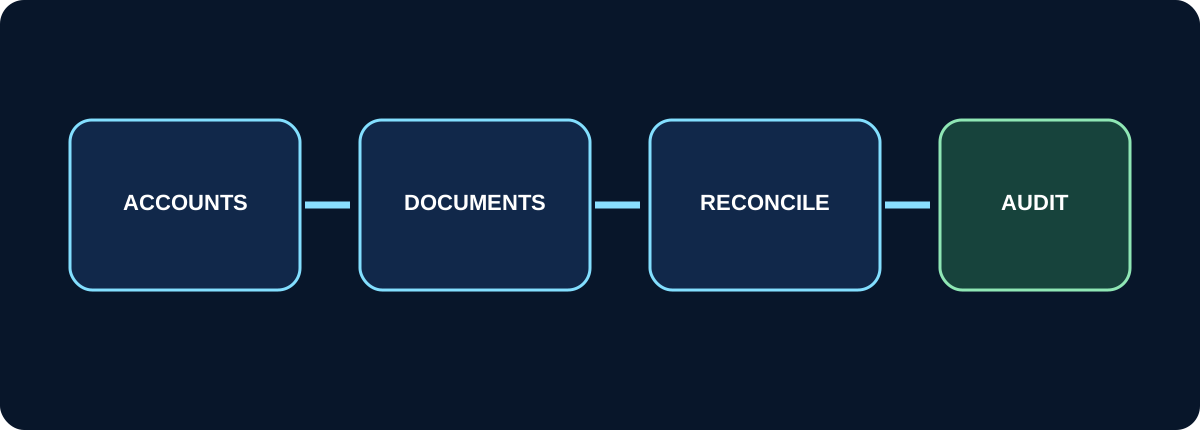
- ✓ Financial statements and reports.
- ✓ General ledger and accounting entries.
- ✓ Bank statements and reconciliations.
- ✓ Customer and supplier balances.
- ✓ Inventory and assets where relevant.
- ✓ Contracts and supporting documents.
Why do disconnected files make audit harder?
When accounting, inventory and supporting documents are stored in separate systems and employee files, collecting audit evidence becomes slower and less reliable.
An integrated system does not replace the auditor, but it can make transaction history and supporting information easier to retrieve.
Does every company legally require an external auditor?
Requirements differ by country, legal form, activity, size and regulator, so one rule should not be applied to every business.
Any decision based on a legal audit requirement should be checked against the rules applicable to the specific entity and jurisdiction.
How should a business prepare for audit?
- ✓ Close accounting periods and review entries.
- ✓ Complete bank reconciliations.
- ✓ Reconcile customer and supplier balances.
- ✓ Review inventory and fixed assets.
- ✓ Organise supporting documentation.
- ✓ Resolve unexplained differences before audit begins.
NOZOM .cloud can help organise audit-ready information
Keeping accounting, sales, purchasing, inventory and supporting records within a connected environment makes it easier to prepare information for review.
As NOZOM .cloud expands its external-service workflows, professional services can become part of a more organised business journey rather than a disconnected process.