

Why does cheque management become difficult as a business grows?
A small number of cheques may be manageable manually, but increasing customers, suppliers and due dates quickly make spreadsheets and memory unreliable.
The challenge is not only recording a cheque number. The business needs to know where the cheque is, when it is due, which bank is involved, whether it was deposited and whether funds were actually collected.
The lifecycle of an incoming cheque
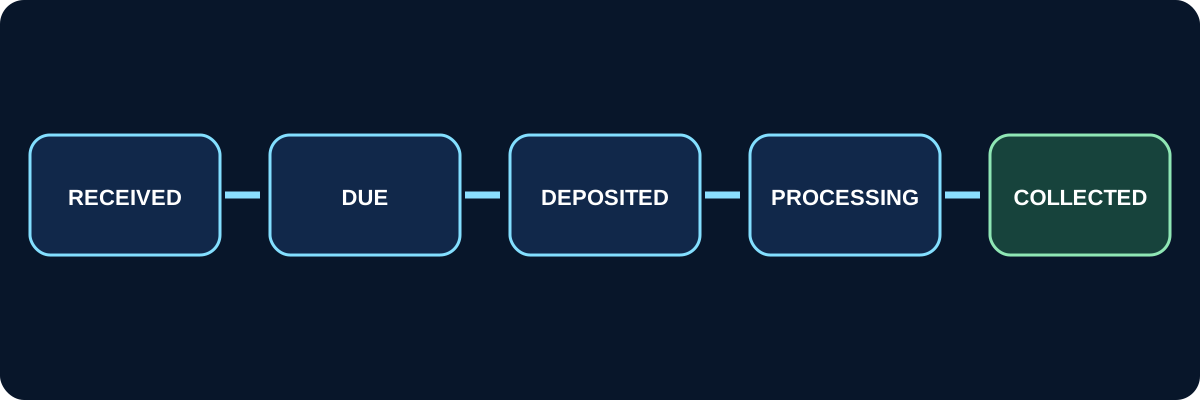
- ✓ Receive the cheque from the customer.
- ✓ Record bank, number, value and due date.
- ✓ Hold it until the appropriate deposit date.
- ✓ Deposit it with the bank.
- ✓ Confirm collection when funds are received.
- ✓ Record a return and reason if collection fails.
What about outgoing cheques?
Outgoing cheques require the same discipline because they represent future business obligations.
A clear outgoing-cheque schedule helps management anticipate cash requirements before due dates arrive.
- ✓ Supplier or beneficiary.
- ✓ Bank account.
- ✓ Cheque number.
- ✓ Amount.
- ✓ Issue date.
- ✓ Due date.
- ✓ Current status.
Which statuses should be tracked?
- ✓ New or received.
- ✓ Post-dated.
- ✓ Ready for deposit.
- ✓ Deposited.
- ✓ Collected.
- ✓ Returned.
- ✓ Cancelled when applicable.
Why should cheques connect to accounting?
Cheque tracking is more useful when it is not isolated from customers, suppliers and accounting transactions.
Linking each cheque to its business context makes it easier to understand what it represents and what action is required.
How can NOZOM .cloud help?
The NOZOM .cloud Cheques application helps organise incoming and outgoing cheques, due dates and operational statuses in one place.
Accounting and management can see what is coming due, what has been deposited, what has been collected and what needs attention.